
[fusion_builder_container admin_label=”Episode” hundred_percent=”no” hundred_percent_height=”no” hundred_percent_height_scroll=”no” hundred_percent_height_center_content=”yes” equal_height_columns=”no” menu_anchor=”” hide_on_mobile=”small-visibility,medium-visibility,large-visibility” status=”published” publish_date=”” class=”” id=”” link_color=”” link_hover_color=”” border_color=”” border_style=”solid” margin_top=”” margin_bottom=”” padding_top=”” padding_right=”” padding_bottom=”” padding_left=”” gradient_start_color=”” gradient_end_color=”” gradient_start_position=”0″ gradient_end_position=”100″ gradient_type=”linear” radial_direction=”center center” linear_angle=”180″ background_color=”” background_image=”” background_position=”center center” background_repeat=”no-repeat” fade=”no” background_parallax=”none” enable_mobile=”no” parallax_speed=”0.3″ background_blend_mode=”none” video_mp4=”” video_webm=”” video_ogv=”” video_url=”” video_aspect_ratio=”16:9″ video_loop=”yes” video_mute=”yes” video_preview_image=”” filter_hue=”0″ filter_saturation=”100″ filter_brightness=”100″ filter_contrast=”100″ filter_invert=”0″ filter_sepia=”0″ filter_opacity=”100″ filter_blur=”0″ filter_hue_hover=”0″ filter_saturation_hover=”100″ filter_brightness_hover=”100″ filter_contrast_hover=”100″ filter_invert_hover=”0″ filter_sepia_hover=”0″ filter_opacity_hover=”100″ filter_blur_hover=”0″ admin_toggled=”no” type=”legacy”][fusion_builder_row][fusion_builder_column type=”1_1″ layout=”1_1″ spacing=”” center_content=”no” link=”” target=”_self” min_height=”” hide_on_mobile=”small-visibility,medium-visibility,large-visibility” class=”” id=”” hover_type=”none” border_color=”” border_style=”solid” border_position=”all” border_radius=”” box_shadow=”no” dimension_box_shadow=”” box_shadow_blur=”0″ box_shadow_spread=”0″ box_shadow_color=”” box_shadow_style=”” padding_top=”” padding_right=”” padding_bottom=”” padding_left=”” margin_top=”” margin_bottom=”” background_type=”single” gradient_start_color=”” gradient_end_color=”” gradient_start_position=”0″ gradient_end_position=”100″ gradient_type=”linear” radial_direction=”center center” linear_angle=”180″ background_color=”” background_image=”” background_image_id=”” background_position=”left top” background_repeat=”no-repeat” background_blend_mode=”none” animation_type=”” animation_direction=”left” animation_speed=”0.3″ animation_offset=”” filter_type=”regular” filter_hue=”0″ filter_saturation=”100″ filter_brightness=”100″ filter_contrast=”100″ filter_invert=”0″ filter_sepia=”0″ filter_opacity=”100″ filter_blur=”0″ filter_hue_hover=”0″ filter_saturation_hover=”100″ filter_brightness_hover=”100″ filter_contrast_hover=”100″ filter_invert_hover=”0″ filter_sepia_hover=”0″ filter_opacity_hover=”100″ filter_blur_hover=”0″ last=”true” border_sizes_top=”0″ border_sizes_bottom=”0″ border_sizes_left=”0″ border_sizes_right=”0″ first=”true”][fusion_text columns=”” column_min_width=”” column_spacing=”” rule_style=”default” rule_size=”” rule_color=”” content_alignment_medium=”” content_alignment_small=”” content_alignment=”” hide_on_mobile=”small-visibility,medium-visibility,large-visibility” sticky_display=”normal,sticky” class=”” id=”” font_size=”” fusion_font_family_text_font=”” fusion_font_variant_text_font=”” line_height=”” letter_spacing=”” text_color=”” animation_type=”” animation_direction=”left” animation_speed=”0.3″ animation_offset=””]
Think Agri Real Insights
Episode 10 November 2021
[/fusion_text][fusion_accordion type=”toggles” boxed_mode=”yes” border_size=”1″ border_color=”” background_color=”” hover_color=”” divider_line=”” title_font_size=”” icon_size=”” icon_color=”” icon_boxed_mode=”” icon_box_color=”” icon_alignment=”” toggle_hover_accent_color=”” hide_on_mobile=”small-visibility,medium-visibility,large-visibility” class=”” id=””][fusion_toggle title=”Introduction” open=”no” class=”” id=””]

Introduction
This is the tenth episode of Think Agri REAL Insights.
It’s a pleasure to continue adding tools to your Excellent Farming problem solving arsenal.
The focus for this episode is individual thoughts and actions to make harvest as smooth and profitable as possible and to keep an eye on next year and beyond.
In this episode:
- Article 1 encourages whole of farm thinking when pondering the 2022 high input prices.
- Article 2 discusses the commercial advantage of etiquette.
- Article 3 dissects risk and encourages you to make friends with risk as it is measurable and manageable.
Each topic has some content and a practical activity. It’s up to you, how involved you want to get.
Happy reading, listening and implementing!
Farm well, stay well and good luck. Kate
[/fusion_toggle][fusion_toggle title=”Topic 1 – Whole farm thinking for 2022 and beyond” open=”no” class=”” id=””]
Introduction
From this point on, it’s all about the future. The grain is still on the stalk and not all the hay has been baled or carted. There’s a chunk of ‘pending’ money that hasn’t made its way to the bank yet. Next year’s fertiliser and chemical supply is scarce and expensive. Understandably it’s an anxious time, particularly with the weather interruptions to harvest and other forces outside our control.
The principles of Excellent Farming including managing what’s within your control can help channel that fear. Considering the whole of farm strategy while procurement planning for next year, will pay short and long term dividends.
Why is it important to think about the whole?
In any team sport, each player has a role. Glen McGrath wasn’t in the Australian Cricket team for his batting average but what a gun bowler he was; the success of that era was a team of skilled players each with their own role within the team. The Australian Cricket Team was successful because they had a balance of all skills and were able to work together as one cohesive unit for victory on the field.
Similar success occurs in farm businesses that view the whole rather than focusing only on certain aspects such as fertiliser prices doubling when phosphate becomes more expensive due its limited availability.
Understanding this concept helps avoid making rash judgements and ideally stops us from being like the armchair cricket expert wanting to drop a player after one poor game.
Some thoughts on whole farm thinking for 2022.
-
What will the weather do?
It’s a bit early to answer that question. The late spring rain means many regions will have a higher than normal level of plant available water (PAW) if weeds are controlled. This buffers yield potential and whole farm income in 2022 and somewhat offsets the higher than average fuel, fertiliser and chemical prices.
-
Will summer weed control pay at these chemical prices?
The answer is undoubtedly yes. There is a mountain of evidence to support this. Returns of investment can be up to 10 to 1 from soil N and moisture conservation and other agronomic benefits. The most comprehensive resource can be found in the Summer fallow Weed Management Manual found referenced below.
https://grdc.com.au/__data/assets/pdf_file/0028/98632/summer-fallow-weed-management-manual.pdf.pdf
-
Crop less or more or stay the same?
Are you farming for just 2022 or for 2032?
It’s tempting to play lean and mean for one season when input prices are high, but what are the flow on effects? Cropping less and doing it well will not necessarily overly compromise short term profit because the law of diminishing returns reduces the profit margin on the most expensive paddocks to grow. Lowering crop intensity helps manage weedy paddocks and rebuild organic nitrogen supplies. You probably already know this, however I reckon it must be said out loud more often. It is a complete misnomer that cropping everything every year is the most profitable pathway.
-
Ryegrass versus herbicides. Ryegrass will always win in the end.
That’s the message from weed scientists, and experienced weed management communicators. Ryegrass is too adaptable and competitive to be beaten by chemicals alone. New chemistry such as Overwatch is useful, but not a panacea. With that in mind is 2022 the year to drop out of a few of the worst ryegrass paddocks? It makes no sense to fertilise weeds. Let those paddocks have a year on the bench.
-
Test don’t guess
At $1300 (or more) per tonne for P fertiliser, a $100 soil test per paddock or soil type zone is a good investment. Invest wisely and allocate fertiliser where it’s needed most.
-
Some P is better than none.
In the last wave of high fertiliser prices, JSA Independent conducted several P fertiliser trials across a range of soil types and rainfall zones. The number one finding was that nil P is fraught with danger reducing both biomass and yield. Some P was enough to generate an economic yield response. Given the strong run of years and the fact that P reserves may be well down, the definition of “some P” will vary depending on soil type and location. And as for cheap alternatives, Guano is batsh#t – literally.
-
Short term pain for long term gain
It’s a long term strategy to build fertility and manage weeds, pests and disease through the use of break crops, pasture and fallow phases. It’s like putting money in superannuation. You can’t access those funds this year but the rewards will build up over time.
-
What about the sheep or cattle?
Carefully managed grazing of paddocks can add value to the system without compromising soil quality. Summer grazed stubbles are less prone to mice problems. It’s another tool for ryegrass management and can lower the cost structure over all. Agistment is a way of gaining access to stock and their associated whole of system benefits If the expense of buying in is a barrier
-
What about hay?
The crystal ball is locked firmly in the cupboard for now but supply signals on both the domestic and export front will be much clearer by March next year. Keeping the mind and eyes open is prudent.
[/fusion_toggle][fusion_toggle title=”Topic 1 – Suggested Actions” open=”no” class=”” id=””]
Think seriously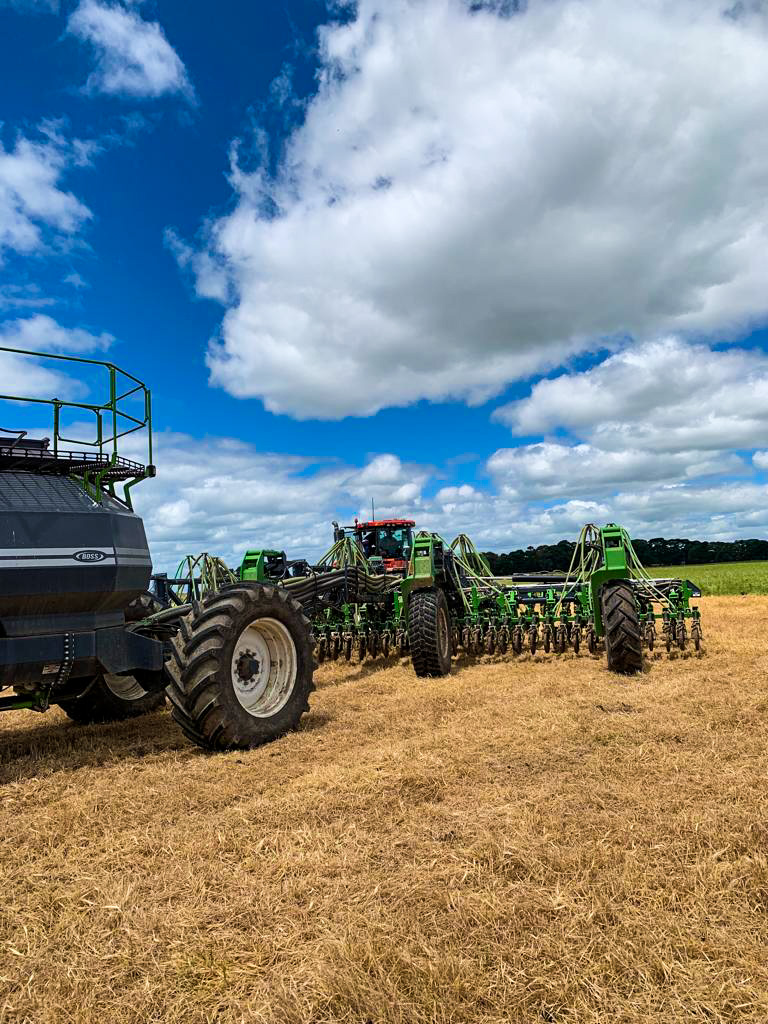 about where to best place your input dollar for 2022 without compromising long term.
[/fusion_toggle][fusion_toggle title=”Topic 2 – Is Farm Etiquette Quaint or Quintessential?” open=”no” class=”” id=””]
Introduction
When I say etiquette, what comes to mind?
Table manners? Shaking hands after the game is over? The mysteries of golf etiquette?
Golf is mainly an individual sport. Sometimes there are team events but mostly you play your own game. The rules of golf require you to play in groups of two to four. Golf etiquette is the set of unwritten conventions that ensures 200 people can play a round of golf in under four hours and enjoy themselves. Golf is lauded as one of the most frustrating games in the world. Without etiquette, tolerance and tempers would certainly fray.
Jay Remer is known as Canada’s “etiquette guy”. In an interview with Country Guide, Canada’s oldest farming publication, Jay described etiquette as a code of conduct that allows interaction without ruffling feathers. He states, “etiquette allows us to communicate civilly with each other”.
In his view, etiquette helps us behave well in business, family and community interactions. It is not confined to playing sports or to formal dinners. Etiquette helps us connect better with other people.
Connection is a pillar of trust and cooperation. I strongly suspect that one of the reasons high performing farms thrive is the ability to connect well with other people and build good relationships so the most important jobs get done well and on time.
Could there be any more important time to use etiquette to advantage than at harvest time? A time when 80 to 100% of your income is collected in 10% of the time that a full year affords us.
What are the unwritten rules that help your harvest team reap the seasonal income and capture all the potential on offer?
Great teams do these things
-
They say hello

When we are busy and occupied with a million thoughts, common courtesies can go out the window. A simple greeting at the beginning of a shift either verbal or via text message goes a long way to setting up the day. It is impossible to connect without saying hello.
-
They are encouraging and say thank you
Remer’s principles for actions include encouragement and gratitude. It’s so easy to take each other for granted, especially when working with family.
Make a habit of going out of your way to say thank you to someone in the team and acknowledge their contribution.
Make a habit of encouraging less experienced staff to build their confidence and quell anxiety. Most stuff ups occur when someone is nervous about stuffing up. Gentle encouragement is more effective for training the new chaser bin driver than belittling disguised as humour. (Banter only works when both people are having fun).
Set a reminder on your phone to thank and encourage a colleague at a set time each day and send someone a quick text.
-
They say sorry
We all make mistakes. That’s what humans do. A quick “sorry I stuffed up” even via SMS avoids tiny blips becoming big issues.
This relates to the principles of responsibility and humility- key traits of high performing farms and pillars of life according to Remer.
-
They forgive
Compassion is another pillar of life and essential for farm business resilience. Self-compassion and compassion towards others helps you move on, regain perspective and get the eye back on the prize which is harvesting income.
-
They care
Awareness of those around you is a superpower of highly effective leaders. It doesn’t mean you need to solve other people’s issues. It does help you understand how to play to their strengths.
Further Reading: Lammers-Helps Helen Farm Etiquette: Essential for business success https://www.country-guide.ca 
[/fusion_toggle][fusion_toggle title=”Topic 2 – Suggested Actions” open=”no” class=”” id=””]
 What are five daily habits that could help your harvest team get the income collected off the stalk with the least amount of people disruption?
[/fusion_toggle][fusion_toggle title=”Topic 3 – The Case for Befriending Risk” open=”no” class=”” id=””]
Introduction
I don’t need to tell you that farming, by its very nature, is exposed to risk. You live that every day. On the flipside, it’s also very robust. Otherwise, fourth and fifth and sixth generation family farms would not exist.
There are new risks and new worries in 2021 as the pandemic has demonstrated. The future risks associated with greenhouse gas emissions and climate change are also front and centre.
Typically though, production risks most thought about, not only here in Australia but across the globe. The International Food Policy Research Institute, Washington, DC, USA found that 66 per cent of global publications on risks in agriculture were on production risks.
This article puts the case forward for making friends with risk. Combining farm management economics and neuroscience demonstrates why.
Manage not minimise
Farm management economist Professor Bill Malcolm of the University of Melbourne says
“Above average returns on capital are only possible if the capital is exposed to above average risk. The emphasis in farm management on risk and volatility as something to be minimised is misplaced”.
In other words, it makes economic sense to become familiar with risk and manage the consequences rather than to avoid it altogether.
Befriend risk to manage bias
Consider the case study of the risk of flooding in a low lying paddock on a property called “Damp Downs”.
Damp Downs lost considerable income to flood damage in one particular year. Since then, flood damage is top of mind and influences every decision. Unknowingly, some opportunities are missed due to the fear of flooding.
Analysis revealed that moderate flooding years are actually the most profitable years. This is despite the angst caused by flooding and the severe losses in some paddocks. This surprised the owners because the story they’d told themselves in their head and around the dinner table was vastly different.
Armed with that knowledge, floods now become the friend of Damp Downs, not the detested enemy. Some drainage work is planned in the paddock that gets flooded 9 years out of 10. There is less angst about the paddocks that only get flooded 1 in 20 years. Numbers are your friend!
Risks are knowable but often feared
The economics definition of risk is that the probability of occurrence is knowable. The good thing about risk is statistical techniques can be used to frame the odds. That said, even though production risk is largely quantifiable, it’s very tempting not to go through that process because of fear.
Unpleasant memories from floods, droughts, a frost event or a grain marketing disaster create fear and then judgement becomes clouded. As a result, fear invokes a fight or flight response from the brain. One of the responses to fear is avoidance. So even though it makes sense to do the numbers, they don’t get done. Take the recent frost events in the Wimmera. It makes perfect sense to assess each paddock for frost damage to plan for harvest but there will be many Wimmera paddocks that won’t be looked at before the header goes in.
Uncertainty
Uncertainty is different from risk. Uncertain future events have no known probabilities and this messes with the brain. When faced with uncertainty the brain invokes the fight or flight response and is less likely to draw on the reasoning and logical parts of the brain.
When fear and uncertainty are combined it’s very difficult to make sensible logical decisions based on reasoning. If we don’t quantify the risks even though that information is knowable, the brain assumes we are dealing with uncertainty. Doing the sums on frost damage for example, takes the brain back to the logical side rather than the flight or fight side.
Take the frost example, we can chance our luck and wait until the header gets in or we can go to known frost prone areas and make an assessment of frost damage. Without the assessment process, fear can hijack the seemingly logical tactic that some analysis may reveal. For example harvesting the low parts of the paddock last and segregating the damaged grain from the rest would be a logical path of action.
Doing some numbers to quantify the risks can alleviate the fear and result in better decision making.
Summing Up
Risk taking is an essential part of money making.
Risks are quantifiable. Facts and figures help access reasoning and logic.
Befriending risk reduces fear and enables stronger decision making amidst uncertainty.
[/fusion_toggle][fusion_toggle title=”Topic 3 – Suggested Actions” open=”no” class=”” id=””]
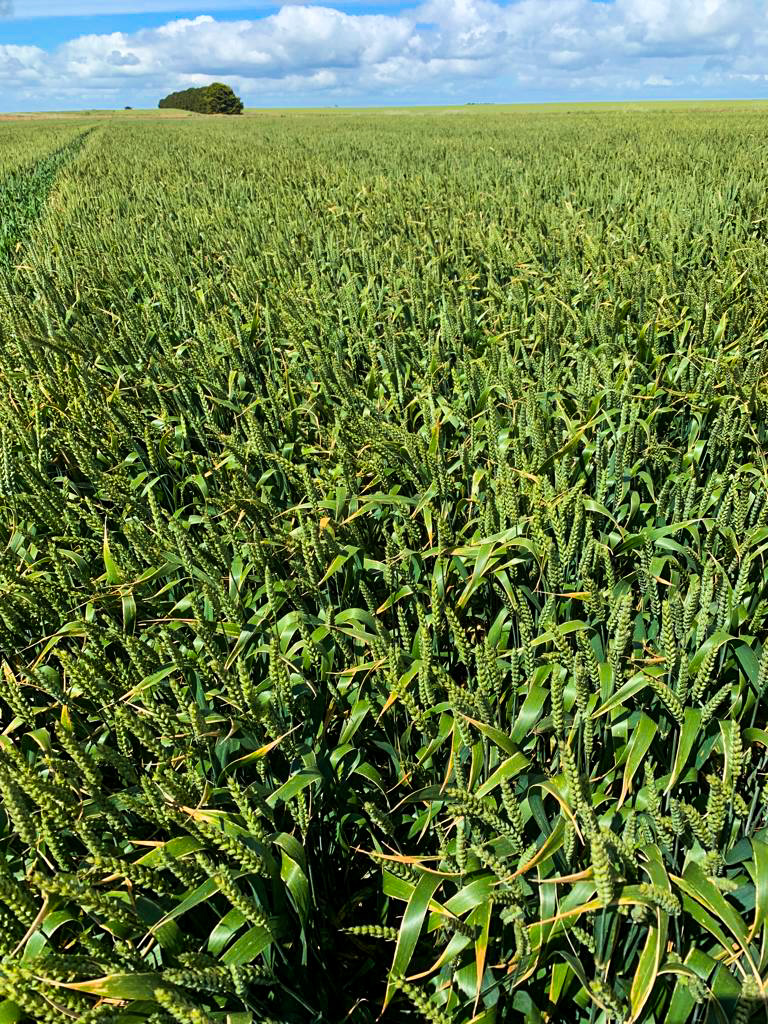 Think about each crop commodity or each block you manage.
- What are your key risks for this harvest?
- What do you feel uncertain about?
- What assessments or measurements can be taken to reduce the unknowns and manage risk?
[/fusion_toggle][fusion_toggle title=”Audio” open=”no” class=”” id=””]
Listen to all topics via your Podcast link or below.
[/fusion_toggle][/fusion_accordion][fusion_title title_type=”text” rotation_effect=”bounceIn” display_time=”1200″ highlight_effect=”circle” loop_animation=”off” highlight_width=”9″ highlight_top_margin=”0″ before_text=”” rotation_text=”” highlight_text=”” after_text=”” hide_on_mobile=”small-visibility,medium-visibility,large-visibility” sticky_display=”normal,sticky” class=”” id=”” content_align_medium=”” content_align_small=”” content_align=”left” size=”1″ font_size=”” animated_font_size=”” fusion_font_family_title_font=”” fusion_font_variant_title_font=”” line_height=”” letter_spacing=”” text_shadow=”no” text_shadow_vertical=”” text_shadow_horizontal=”” text_shadow_blur=”0″ text_shadow_color=”” margin_top_medium=”” margin_bottom_medium=”” margin_top_small=”” margin_bottom_small=”” margin_top=”” margin_bottom=”” margin_top_mobile=”” margin_bottom_mobile=”” text_color=”” animated_text_color=”” highlight_color=”” style_type=”default” sep_color=”” animation_type=”” animation_direction=”left” animation_speed=”0.3″ animation_offset=””]
Access all audio of every episode above below:
[/fusion_title][fusion_audio src=”https://www.thinkagri.com.au/wp-content/uploads/2021/11/ALLTARI_S2E10_Final.mp3″ loop=”off” autoplay=”off” preload=”none” hide_on_mobile=”small-visibility,medium-visibility,large-visibility” class=”” id=”” background_color=”” controls_color_scheme=”” progress_color=”” max_width=”” border_size=”” border_color=”” border_radius_top_left=”” border_radius_top_right=”” border_radius_bottom_right=”” border_radius_bottom_left=”” box_shadow=”no” box_shadow_vertical=”” box_shadow_horizontal=”” box_shadow_blur=”0″ box_shadow_spread=”0″ box_shadow_color=”” animation_type=”” animation_direction=”left” animation_speed=”0.3″ animation_offset=”” /][/fusion_builder_column][/fusion_builder_row][/fusion_builder_container][fusion_global id=”361″]