
[fusion_builder_container admin_label=”Episode” hundred_percent=”no” hundred_percent_height=”no” hundred_percent_height_scroll=”no” hundred_percent_height_center_content=”yes” equal_height_columns=”no” menu_anchor=”” hide_on_mobile=”small-visibility,medium-visibility,large-visibility” status=”published” publish_date=”” class=”” id=”” link_color=”” link_hover_color=”” border_color=”” border_style=”solid” margin_top=”” margin_bottom=”” padding_top=”” padding_right=”” padding_bottom=”” padding_left=”” gradient_start_color=”” gradient_end_color=”” gradient_start_position=”0″ gradient_end_position=”100″ gradient_type=”linear” radial_direction=”center center” linear_angle=”180″ background_color=”” background_image=”” background_position=”center center” background_repeat=”no-repeat” fade=”no” background_parallax=”none” enable_mobile=”no” parallax_speed=”0.3″ background_blend_mode=”none” video_mp4=”” video_webm=”” video_ogv=”” video_url=”” video_aspect_ratio=”16:9″ video_loop=”yes” video_mute=”yes” video_preview_image=”” filter_hue=”0″ filter_saturation=”100″ filter_brightness=”100″ filter_contrast=”100″ filter_invert=”0″ filter_sepia=”0″ filter_opacity=”100″ filter_blur=”0″ filter_hue_hover=”0″ filter_saturation_hover=”100″ filter_brightness_hover=”100″ filter_contrast_hover=”100″ filter_invert_hover=”0″ filter_sepia_hover=”0″ filter_opacity_hover=”100″ filter_blur_hover=”0″ admin_toggled=”no” type=”flex”][fusion_builder_row][fusion_builder_column type=”1_1″ layout=”1_1″ spacing=”” center_content=”no” link=”” target=”_self” min_height=”” hide_on_mobile=”small-visibility,medium-visibility,large-visibility” class=”” id=”” hover_type=”none” border_color=”” border_style=”solid” border_position=”all” border_radius=”” box_shadow=”no” dimension_box_shadow=”” box_shadow_blur=”0″ box_shadow_spread=”0″ box_shadow_color=”” box_shadow_style=”” padding_top=”” padding_right=”” padding_bottom=”” padding_left=”” margin_top=”” margin_bottom=”” background_type=”single” gradient_start_color=”” gradient_end_color=”” gradient_start_position=”0″ gradient_end_position=”100″ gradient_type=”linear” radial_direction=”center center” linear_angle=”180″ background_color=”” background_image=”” background_image_id=”” background_position=”left top” background_repeat=”no-repeat” background_blend_mode=”none” animation_type=”” animation_direction=”left” animation_speed=”0.3″ animation_offset=”” filter_type=”regular” filter_hue=”0″ filter_saturation=”100″ filter_brightness=”100″ filter_contrast=”100″ filter_invert=”0″ filter_sepia=”0″ filter_opacity=”100″ filter_blur=”0″ filter_hue_hover=”0″ filter_saturation_hover=”100″ filter_brightness_hover=”100″ filter_contrast_hover=”100″ filter_invert_hover=”0″ filter_sepia_hover=”0″ filter_opacity_hover=”100″ filter_blur_hover=”0″ last=”true” border_sizes_top=”0″ border_sizes_bottom=”0″ border_sizes_left=”0″ border_sizes_right=”0″ first=”true”][fusion_text columns=”” column_min_width=”” column_spacing=”” rule_style=”default” rule_size=”” rule_color=”” hue=”” saturation=”” lightness=”” alpha=”” content_alignment_medium=”” content_alignment_small=”” content_alignment=”” hide_on_mobile=”small-visibility,medium-visibility,large-visibility” sticky_display=”normal,sticky” class=”” id=”” margin_top=”” margin_right=”” margin_bottom=”” margin_left=”” fusion_font_family_text_font=”” fusion_font_variant_text_font=”” font_size=”” line_height=”” letter_spacing=”” text_transform=”none” text_color=”” animation_type=”” animation_direction=”left” animation_speed=”0.3″ animation_offset=””]
Think Agri Real Insights
Season 4, Episode 16
October 2022
[/fusion_text][fusion_accordion type=”toggles” boxed_mode=”yes” divider_line=”” inactive_icon=”” active_icon=”” icon_boxed_mode=”” hide_on_mobile=”small-visibility,medium-visibility,large-visibility” class=”” id=”” border_size=”1″ border_color=”” hue=”” saturation=”” lightness=”” alpha=”” background_color=”” hover_color=”” divider_color=”” divider_hover_color=”” fusion_font_family_title_font=”” fusion_font_variant_title_font=”” title_font_size=”” title_color=”” icon_size=”” icon_color=”” icon_box_color=”” icon_alignment=”” fusion_font_family_content_font=”” fusion_font_variant_content_font=”” content_font_size=”” content_color=”” toggle_hover_accent_color=”” toggle_active_accent_color=””][fusion_toggle title=”Introduction” open=”no” class=”” id=”” fusion_font_family_title_font=”” fusion_font_variant_title_font=”” title_font_size=”” title_color=”” hue=”” saturation=”” lightness=”” alpha=”” fusion_font_family_content_font=”” fusion_font_variant_content_font=”” content_font_size=”” content_color=””]

Introduction
Good farmers are good thinkers.
I’ve been thinking a lot! Episode 16 was written amongst the rain. It got me thinking about the forecast for more wet, the thoughts and actions that will dictate achieving success and staying well. It got me thinking about my own thoughts and actions, what’s useful and what’s not so useful. It got me thinking about the thinking required to make the most of this season and navigate the uncertainty,
So, this episode focuses on thinking tools and the actions needed to think well, decide well, implement well and farm well.
Topic 1 joins the dots between the production and financial opportunity and the mental preparation and tools that can help you bring it home.
Topic 2 goes deeper with an overview of personal power for managing uncertainty and making constructive decisions under pressure.
Topic 3 introduces the Both/And Thinking – a high tech way of thinking that offers far more value than Either/Or Thinking.
Stay well, farm well and think well.
Kate
[/fusion_toggle][fusion_toggle title=” Topic 1 – Preparing mentally and practically for more wet weather” open=”no” class=”” id=”” fusion_font_family_title_font=”” fusion_font_variant_title_font=”” title_font_size=”” title_color=”” hue=”” saturation=”” lightness=”” alpha=”” fusion_font_family_content_font=”” fusion_font_variant_content_font=”” content_font_size=”” content_color=””]
Introduction
The current combination of high yield expectations, strong commodity prices and the threat of a very wet late spring/summer is a double edged sword of both excitement and trepidation. Preparation in both a mental and practical sense is necessary to plan for the unknown and several possible futures.
I continue to be inspired by those who make the most of what’s on offer and navigate these challenges. Preparation is key and this article aims to refresh and assist you mentally to prepare for challenges ahead.
What’s happening in the Ocean and Atmosphere
Climate Mood A is well and truly upon us with La Nina and IOD negative in full swing. The La Nina system is a strong one according to Jane Bun and the Southern Annular Mode is in a positive phase. This means rain for most parts of Eastern Australia in spring and Summer. The Madden Julian Oscillation phase indicates plenty of tropical moisture to feed the system. As a result, there is roughly a seven out of ten chance that it will be wet for the next few months.
The challenges that present themselves alongside such significant weather events have not been seen since the 2010/2011 summer. It provides a set of challenges on a broad national scale and a cause of worry as harvest approaches.
What’s happening in the paddock
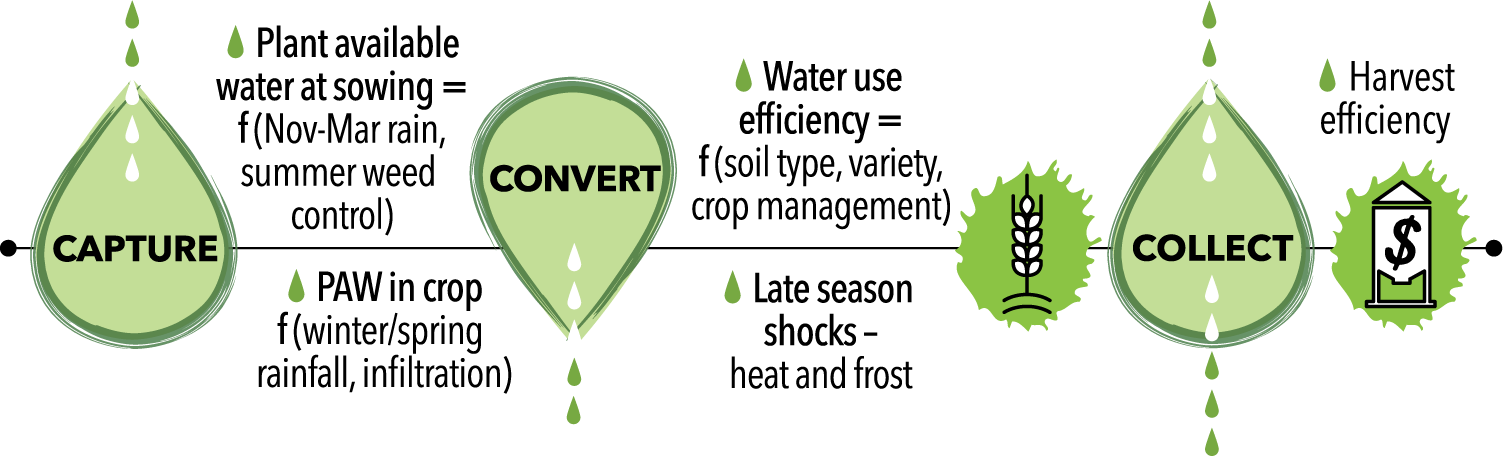
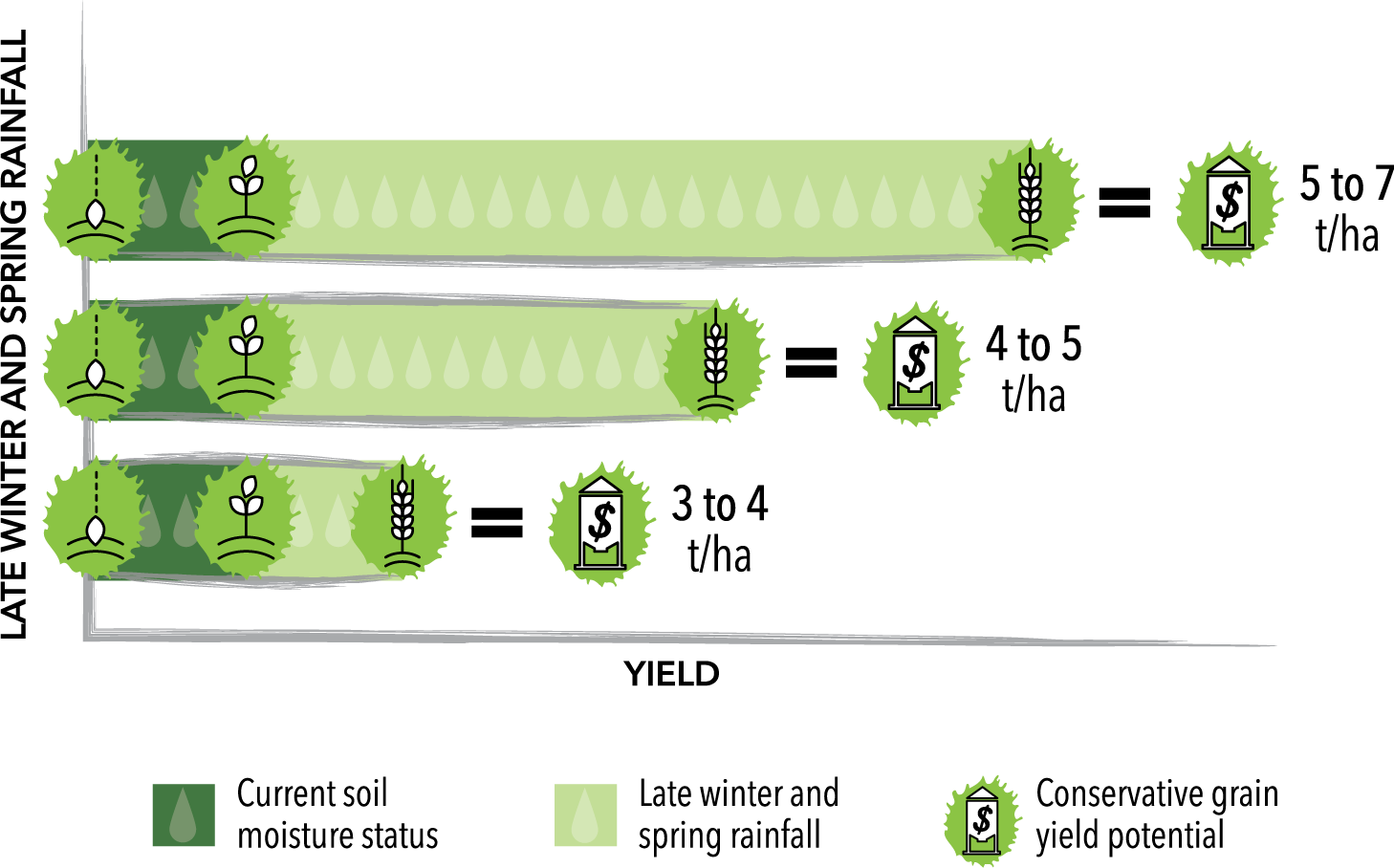
Alongside the challenges, there is opportunity. We are close to some large production and revenue potential with medium rainfall zones looking at 5 to 7 tonne/ha for cereal crops and pulses and canola equating to roughly half that range. This of course depends on the management of weeds, disease and nutrition. A wet finish is a double edge sword and some of this potential is at risk from late disease or harvest losses. Subsequently some of the income potential may be at risk if grain is weather damaged.
What’s happening in our heads and hearts
How’s your thinking Compass?
It’s quite possible there is some fear and worry in the background as challenges present themselves. On the flipside, it’s also possible there’s a high level of acceptance and you are working through plans to get through to the end of the season.
As covered previously in Episode 10 of Think Agri Real Insights, an important element of this process is to befriend risk to reduce fear and enable stronger decision making amidst this uncertainty. Afterall farming, by its very nature, is exposed to risk and our thinking compass enables us to understand and handle this risk better.

How’s the outside noise?
With so many significant weather movements, it can be easy to get obsessed by it. However, the constant focus on weather alone risks the information diet getting skewed. As mentioned in Episode 3, Topic 1, it is important to remember there are different appetites for risk and often someone needs to decide a course of action so we can get on with it.
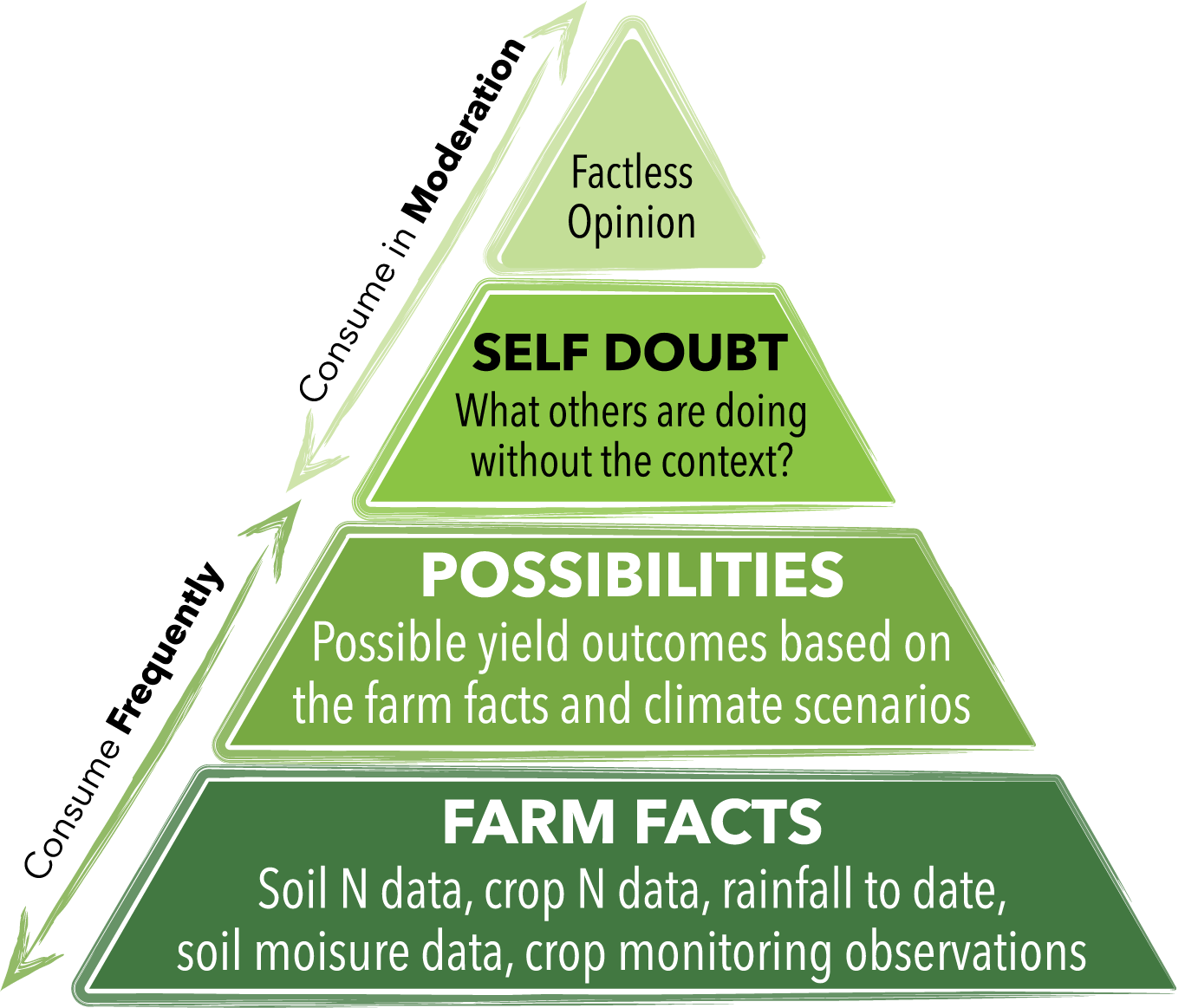
This is a timely reminder to watch your information diet and consume factless opinion and drama in moderation. Considering possible options and using facts to make decisions is an important step in the right direction. You are a good operator so be mindful of self-doubt creeping in and ask yourself if these doubts are truly warranted.
Practical tools to consume frequently may include tools such as the Yield Prophet site, the CliMate app and forecasts4profit.com.au.
What thinking paddock are you in right now?
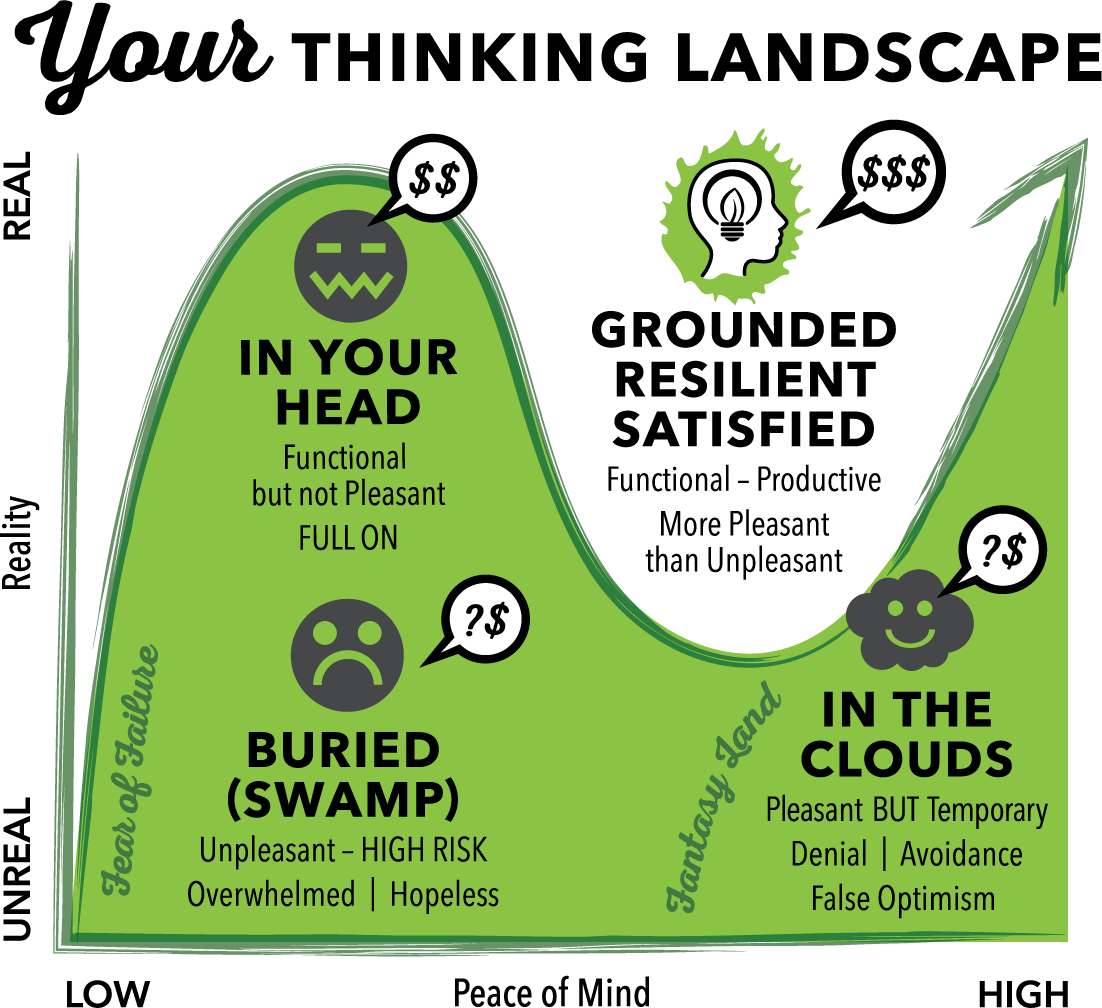
Such advice is good in theory but hard to implement depending on where your head is at any point in time. The more grounded and resilient we are, the easier it is to calm the farm and manage the situation as it unfolds. Your ability to prepare and plan for a potentially challenging harvest needs you to work hard at staying grounded. This can be done in many different ways including:
- Maintaining your mental fitness
- Keeping perspective
- Rest
- Exercise
- Connecting with others
- Appreciating the good things in your life. (Further detail on this follows in Topic 2).
It’s normal to spend some time in the other paddocks when under stress or feeling anxious but it’s hard to make great decisions. Utilising your personal and business support network is really important. As mentioned above, accepting possibilities allows you to move through fear and out of the Clouds or the Swamp and get out of your Head. Athletes spend as much time on managing their thinking landscape as they do preparing physically.
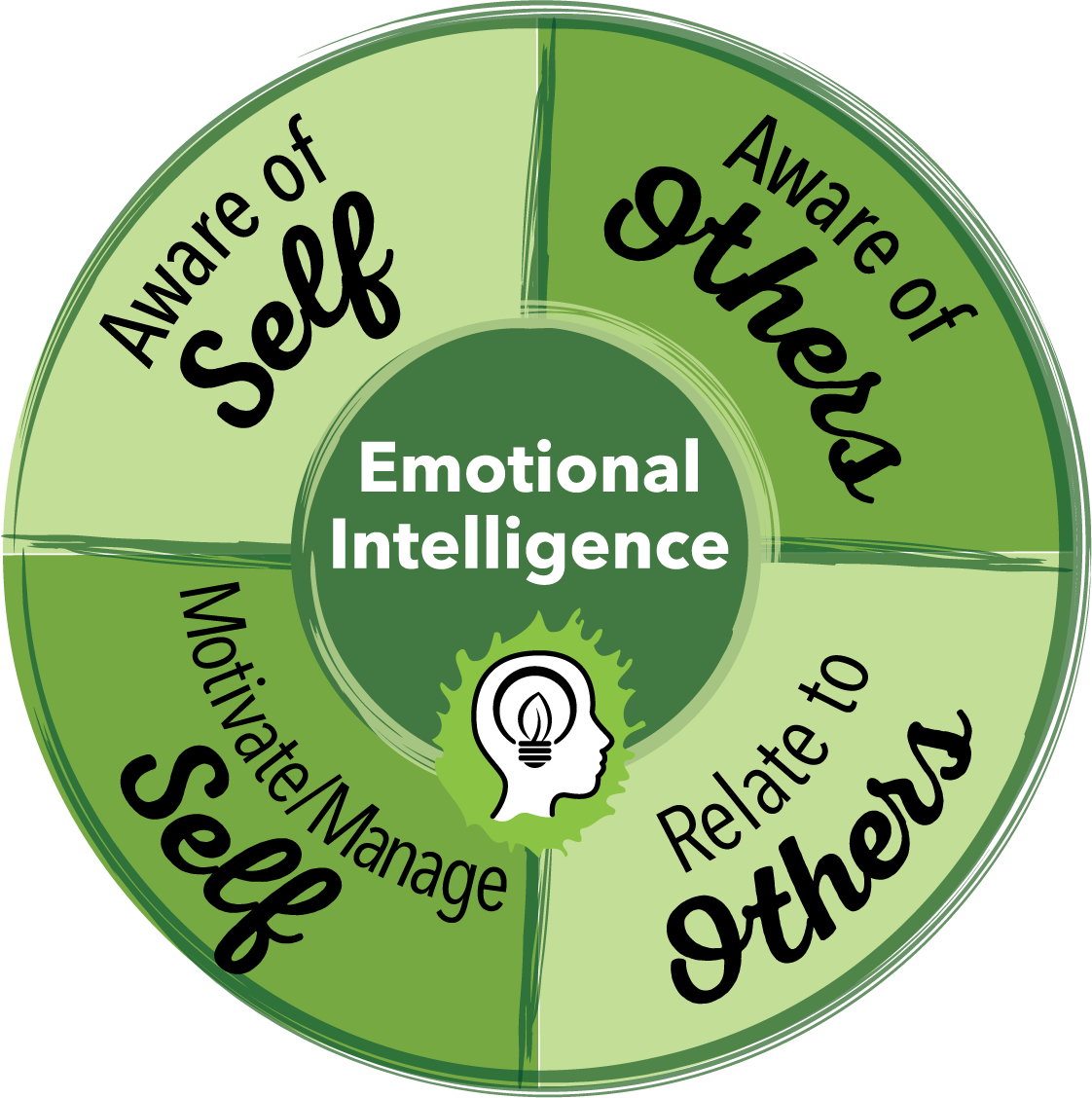
How’s your view? Awareness of self and others is a superpower
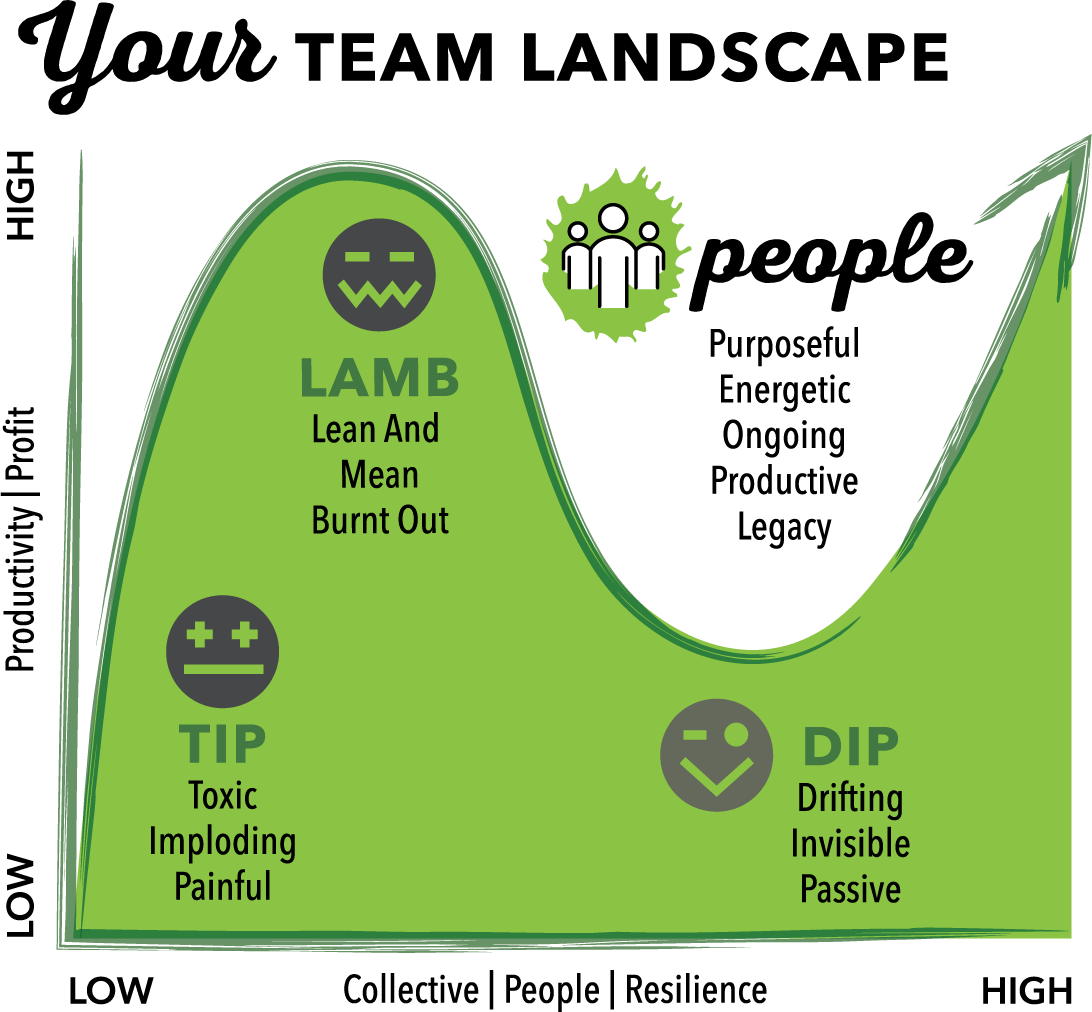
Having a realistic and clear view of your thinking landscape and your team landscape is really useful. Awareness is the superpower of high performing farm leaders and farm businesses. Awareness of self will help keep you grounded; awareness of others helps get things done.
How you interact with others will depend on what thinking paddock you are in and what paddock each of your team is in. The end combination is your team landscape.
People teams get things done well with minimal fuss and maximum fun and reward.
Awareness is the first step to building a PEOPLE team.
What about the finances?
Pick a wet couple of days to catch up on the books. It’s a great time of year to do some forward projections of potential income on a paddock by paddock basis. This helps see what you have out there, prioritise operations and harvest preparedness. This topic will be covered in greater detail in the next episode.
Check in with your overall financial position, knowing where you stand helps maintain perspective and focus.
It’s easy to under or overspend if feeling uncertain or stressed, check the cash flow budget and profit and loss forecast. This contributes to the facts side of the information diet as discussed above. Spending or not spending based on feelings alone is a risk that can be avoided with a small amount of effort.
Summing up
There’s no doubt, the potential extremely high rainfall is causing some anxiety. Take a moment to check in with yourself and others. Use facts as well as feelings to guide your planning and actions as you set about protecting and collecting the income potential on offer.
References and Further Reading
CliMate: Home Page. (2022). Retrieved 6 October 2022, from https://climateapp.net.au/
GRDC South Rainfall history & climate driver tool (2022). Retrieved 6 October 2022, from https://climatetool.forecasts4profit.com.au/
The latest on La Nina/El Nino, IOD, SAM and MJO – all things that drive our weather – Jane’s Update | Jane’s Weather. (2022). Retrieved 6 October 2022, from https://janesweather.com/janes-update/seasonal-forecast
Think Agri Real Insights. Episode 10, November 2021. https://www.thinkagri.com.au/tari_s2e10/
Think Agri Real Insights. Episode 3, Topic 1, 2020. Decision making quick fix 1. Review your information diet. https://www.thinkagri.com.au/episode-3-2020/
The latest on La Nina/El Nino, IOD, SAM and MJO – all things that drive our weather – Jane’s Update | Jane’s Weather. (2022). Retrieved 6 October 2022, from https://janesweather.com/janes-update/seasonal-forecast
Yield Prophet Lite. (2022). Retrieved 6 October 2022, from https://www.yieldprophet.com.au/yplite/
Audio
[fusion_audio src=”https://www.thinkagri.com.au/wp-content/uploads/2022/10/E16_TARI_T1_mixed.mp3″ loop=”off” autoplay=”off” preload=”none” hide_on_mobile=”small-visibility,medium-visibility,large-visibility” class=”” id=”” background_color=”” hue=”” saturation=”” lightness=”” alpha=”” controls_color_scheme=”” progress_color=”” max_width=”” border_size=”” border_color=”” border_radius_top_left=”” border_radius_top_right=”” border_radius_bottom_right=”” border_radius_bottom_left=”” box_shadow=”no” box_shadow_vertical=”” box_shadow_horizontal=”” box_shadow_blur=”0″ box_shadow_spread=”0″ box_shadow_color=”” animation_type=”” animation_direction=”left” animation_speed=”0.3″ animation_offset=””][/fusion_audio]
[/fusion_toggle][fusion_toggle title=”Topic 1 – Suggested Actions” open=”no” class=”” id=”” fusion_font_family_title_font=”” fusion_font_variant_title_font=”” title_font_size=”” title_color=”” hue=”” saturation=”” lightness=”” alpha=”” fusion_font_family_content_font=”” fusion_font_variant_content_font=”” content_font_size=”” content_color=””]
Do this
Use the tools in Topics 2 and 3 to place yourself in the best position to manage the next few months well.

[/fusion_toggle][fusion_toggle title=”Topic 2 – Navigating unrelenting uncertainty with your personal power” open=”no” class=”” id=”” fusion_font_family_title_font=”” fusion_font_variant_title_font=”” title_font_size=”” title_color=”” hue=”” saturation=”” lightness=”” alpha=”” fusion_font_family_content_font=”” fusion_font_variant_content_font=”” content_font_size=”” content_color=””]
Introduction
Rural Australia is a living text-book of managing uncertainty. You are experts at making decisions with incomplete information. The current extreme weather and the thinking challenges outlined in Topic 1 is yet another example of the uncertainty you manage year in year out.
You make tens of tiny important decisions a day, hundreds a week, thousands a month all with incomplete information. Decisions that keep you as safe, functional, and prosperous as circumstances dictate. At times it’s exhausting to think about, let alone live it.
We can’t control the weather but there are eight things I’ve observed throughout the years of working with farmers that buffer the impact of uncertainty. These eight things contribute to your personal power and in combination are a powerful force.
This article is a refresher of the practical tools for tuning up your personal power.

Drafting thoughts
Thought drafting is a useful trick for choosing which thoughts to focus on. It is an adaptation of Stephen R Covey’s Circle of Concern and Influence. To use a cricket parlance, some balls need to be let go through to the keeper, some need to be carefully blocked and others hit for six. Time and energy are freed up to focus on what really matters. It’s easy to say, challenging to do and starts with noticing what’s occupying your mind and asking yourself, is this useful right now. You can find out more about thought drafting within Think Agri Real Insights, Episode 1, 2020.
Dial up your awareness of yourself and others
Emotions are data, and by monitoring our own and others’, we can guide our thinking and actions. This helps manage the uncertainty and make constructive decisions under pressure. It helps to be mindful of other people’s experiences and how best to relate cooperatively. Awareness is the first step of any negotiations for better people dynamics.
Maintain resilience
For many reasons, our resilience reserves are dwindling. Whether it be the pressure of an intensive crop management season, the disappointment of a year that’s too wet, ongoing challenges navigating supply chain and market uncertainty and, of course, the pandemic.
It requires awareness to recognise this and build practices to maintain resilience. Adapting to changing circumstances is a crucial trait of highly effective humans according to resilience expert Kathryn McEwen. Resilience is like a navsat for the brain. Resilience is buildable – it’s not entirely an inherent trait. Resilience varies with life’s pressures. Resilience allows us to mitigate external factors outside of our control. For more information, see Think Agri Real Insights, Episode One, Topic Two, More Than a Fad. Resilience is auto steer for the working brain.
Shift uncertainty to possibilities by replacing fear with acceptance
I observe considerable improvement in farm business owners replacing fear with acceptance and planning for several possible outcomes, especially now the climate is so variable.
Own less stress
According to performance expert Mark McKeon, “ stress is not the problem, the problem is lack of recovery”. Stress prevents grounded thinking. In pressure situations, a useful skill is to be able to listen to others’ angst, without absorbing that angst entirely. The heat of a crisis is busy and demanding, often with no simple answers. Practical tips include getting adequate sleep, eating well, exercising, and scheduling fun and relaxation. These things all add to our resilience bank.
Ditch the judgement and replace with kindness
Counterproductive decision-making in times of stress and pressure is normal. When uncertainty and stress are rife, flight or fight mode kicks in and tends toward emotional decision-making rather than rational. Not everyone may heed your sensible ideas, or you may find yourself behaving in regretful ways. When trying to encourage others, remember you cannot control their decisions and actions.
Be kind to yourself and remember you are human. Compassion to self and others is critical for navigating your way through uncertain times.
Do not fear failure, expect it and learn from it. Embrace the wins and celebrate them.
Be clear on your role at any given time
You are leant upon as a friend, family member, or volunteer in the community, as well as a business owner and operator. We only have a certain amount of energy, and under stress, we need to be judicious about where best to spend it. Your community sees you as a leader but beware rescuing others to your own detriment. Sometimes your family may simply be looking for a parent, sibling or partner – not a manager. Sometimes they’ll be looking for leadership befitting a multimillion-dollar business. Each role is different, and obligations will vary.
Set boundaries to allow recovery time
Rest allows us to regain essential headspace. We can’t continually fill up our tank with the worries of the world and our own, without a relief valve. To serve yourself and others well, finding time to relax and recover is crucial. Set boundaries for recovery time and even turn off your phone. Your mind, your body and your family will thank you for it.
Summing Up
There is a lot to be positive about in agriculture at present and the season is very promising. There also the inevitable tricky surprises and challenges.
Tapping into your personal power can help you maintain perspective, see the positives, worry less and achieve more.
References and further reading
McKeon, M (2018), Sustainable peak performance for advisers, GRDC Update papers https://grdc.com.au/resources-and-publications/grdc-update-papers/tab-content/grdc-update-papers/2018/02/sustainable-peak-performance-for-advisers
Resilience.TV | Adapt, Optimisation, Sustain. https://resilience.tv/
Think Agri Real Insights (March 2020), Episode One, topic two, People skills and emotional Intelligence – Good enough for Warren Buffet – good enough for me!, https://www.thinkagri.com.au/think-agri-real-insights-episode-1-2020/
Think Agri Real Insights (December 2019). Episode One, topic two, More Than a Fad. Resilience is auto steer for the working brain. https://www.thinkagri.com.au/think-agri-real-insights-episode-1-2019/
Think Agri Real Insights (December 2019). Episode One, topic three, Scenario analysis, a critical tool for managing uncertainty https://www.thinkagri.com.au/think-agri-real-insights-episode-1-2019/
Audio
[/fusion_toggle][fusion_toggle title=”Topic 2 – Suggested Actions” open=”no” class=”” id=”” fusion_font_family_title_font=”” fusion_font_variant_title_font=”” title_font_size=”” title_color=”” hue=”” saturation=”” lightness=”” alpha=”” fusion_font_family_content_font=”” fusion_font_variant_content_font=”” content_font_size=”” content_color=””]
Do this
- What things will you need to do to maintain your personal power?
- Assess the current situation and think about the possible futures at the end of October.
What do you know?
Projected yield and income per paddock?
Where is the most value?
Which crop type, which paddock?
What don’t you know?
What will the market do?
When will the rain fall and how much?
When will the IOD phase out?
How strong will the summer La Nina be?
What are two or three possibilities and what do you know about the odds of each situation occurring? (The answers are examples not projections)
Wet October – highly likely.
Some loss of crop on most flood prone part of farm – possible
Crop yields well above average over all of farm – highly likely
Late season diseases like stem rust and botrytis will need managing – highly likely
What do you need to plan for each scenario?
Crop monitoring; fungicide supply.
Harvest planning.
Try this exercise for working through the options.
[/fusion_toggle][fusion_toggle title=”Topic 3 – “Both/And” is a high-tech innovative thinking skill” open=”no” class=”” id=”” fusion_font_family_title_font=”” fusion_font_variant_title_font=”” title_font_size=”” title_color=”” hue=”” saturation=”” lightness=”” alpha=”” fusion_font_family_content_font=”” fusion_font_variant_content_font=”” content_font_size=”” content_color=””]
Introduction
In the research that led to Crops People Money and You, some of the more surprising attributes seemed contradictory. For example, in their decade-long study of 259 farms in Western Australia, Professor Ross Kingwell from the University of Western Australia and colleagues found that the people within high performing farm businesses were more likely to be associated with community activities like weekend sport.
What? Take time off on weekends and be making more money than 75% of your peers? How could that be so?
This is just one of many contradictions in complex farming systems that involve humans, animals, machinery and money as well as the climate and the soil. Such a contradiction is called a paradox.
Entertaining that contradictions can and do exist is known as paradoxical thinking or in lay terms, Both/And thinking.
Both/And thinking is the high-tech thinking mode that will provide more problem solving power than any agtech gadget. You can’t order Both/And online but you can understand the concept and give it a try.
In this article I delve deeper into Both/And thinking and how it contributes to flexible farm business decision making.
The default setting
Take this scenario – you are in the paddock with agronomist Kate and are posed with the question of should you spray a third fungicide to prevent stripe rust in the head or should you not? Ideally, you want a yes or no answer.
Kate doesn’t give you one – she says both scenarios are valid, and it depends. In the end she recommends the following:
- spray the paddocks that have not yet flowered and have MRMS or lower resistance ratings
- don’t spray those that have well-formed grains and are super clean for rust and have an MR rating for stripe rust resistance.
As a result, you spend less, have time freed up to use on other priorities and have a good chance of protecting yield potential on the most vulnerable crops.
At first you are frustrated because you were looking for a simple answer. In the end you do the sums and are comfortable with the approach. This is an example of how Both/And thinking can help your business.
Our brains have a default setting to Either/Or thinking so that we feel more certain and less frightened according to Wendy Smith and Marianne Lewis who are experts in the theory and application of Both/And thinking . Our brain wiring means we are naturally inclined to pick a side to feel more certain. This defence mechanism is “the Either/Or” scenario. It operates across all levels of thinking from big picture to practical and operational. This antidote to uncertainty inhibits our ability to unravel complex situations and to fine tune solutions like the one above.
Flicking the switch to high-tech Both/And thinking
What if we switch the thinking to Both/And in these scenarios, it’s possible to find ways to:
- Work on the farm and contribute to the community
- Spray some of the wheat and don’t spray some in the example above
- Work hard and get some rest
- Get big and get out if you want to
- Stay small and stay in if you do it well
- Work for the love and the money
When looking at the suggestions above, if they seem possible – you most likely have a well-used Think/And Button. Alternatively, if these concepts seem ridiculous to you it may be that Either/Or Button is your default mode.
Organisational researchers have studied the impact of Both/And thinking on leadership and business performance and the evidence is very clear that Both/And thinking is an underutilised secret sauce of flexible agile leaders and organisations.
Further contrasts between Either/Or and Both/And thinking have been listed below.
[fusion_table fusion_table_type=”1″ fusion_table_rows=”” fusion_table_columns=”” hide_on_mobile=”small-visibility,medium-visibility,large-visibility” class=”” id=”” animation_type=”” animation_direction=”left” animation_speed=”0.3″ animation_offset=””]
| Either/Or | Both/And |
|---|---|
| Polarising situations | Invites possibilities |
| Making false assumptions | Allows assumptions to be questioned |
| All or nothing and high risk or ultra conservative | Some but not all – risk and reward |
| Rigid and slow to respond to changing circumstance | Flexible management and quick to respond |
[/fusion_table]
What does it mean for farm problem solving?
Mark Bennett heads up the ANZ Banks Regional Division among other roles. He spoke on October 5 at the ABARES Regional Outlook Conference in Bendigo providing his thoughts and insights about opportunities for farmers. While we are positioned very well globally and at a strong point in the production cycle, including the price cycle across most commodities, Mark worries about regulatory risk. And so do I.
Pressure is increasing domestically and from abroad to produce climate friendly food and live up to the clean and green mantra.
Both/And thinking is a useful tool to explore ways to meet expectations (and regulations) and be highly productive and profitable.
The first steps are to shift your perception of the problem and consider the possibilities. The third step is to get comfortable with feeling discomfort as you explore the options. For example:
- We can use chemicals AND adhere to withholding periods to keep produce safe and protect the crop.
- We can use programs like AgWorld and AgriWebb to their full capacity to accurately record chemical use. We can prioritise record keeping and delegate it to the younger, very digitally literate members of the team. We can be ready for traceability. We can do all this without compromising productivity.
- We can store chemicals safely, dispose of waste thoughtfully AND protect yield potential.
- We can tell our story to consumers and policy makers so they can see that farmers care for the land and use fertilisers and chemicals to efficiently grow food.
These are tiny examples of shifts in thinking that will open up creative possibilities to solve tricky problems.
Summing Up
Both/And Thinking is a Superpower for tackling tricky problems and adapting quickly. Those that have the natural ability to do this are quick adapters and appear lucky. It’s a learnable skill and one that I think will be critical for thriving now and in the future.
References and further reading
Data driven Farm Management Software for all Farms | Agworld. (2022). Retrieved 6 October 2022, from https://www.agworld.com/au/
Fletcher, Jerry & Olwyler, Kelle (1997). Paradoxical Thinking How to Profit from Your Contradictions. Retrieved from https://www.hrcircleofinfluence.nl/wp-content/uploads/Samenvatting-paradoxical-thinking.pdf#:~:text=Step%201%20-%20Finding%20Your%20Core%20Per-%20sonal,With%20Groups%20In%20Conclusion%201%201%202%203
Home. (2022). Retrieved 6 October 2022, from https://www.agriwebb.com/
Kingwell, R., 2011. Managing complexity in modern farming. Australian Journal of Resource Economics, Volume 55, pp. 12-34
LinkedIn. Mark Bennet. (2022). Retrieved 6 October 2022, from https://www.linkedin.com/in/mark-bennett-2326105/
Robson, L. (2022). Why the ‘paradox mindset’ is the key to success. Retrieved 6 October 2022, from https://www.bbc.com/worklife/article/20201109-why-the-paradox-mindset-is-the-key-to-success
Ross Kingwell, Lucy Anderton, Nazrul Islam, Vilaphonh Xayavong, Angela Wardell-Johnson, David Feldman and Jane Speijers (2013). Broadacre farmers adapting to a changing climate https://nccarf.edu.au/wp-content/uploads/2019/03/Kingwell_2013_Broadacre_farmers_adapting.pdf
Smith, Wendy and Lewis, Marianne: The Profound Limitations of “Either-Or” Thinking (2022) from https://markccrowley.com/wendy-smith-marianne-lewis-the-profound-limitations-of-either-or-thinking/
Think Agri (2022). Crops, Money, People and You. Retrieved 6 October 2022, from https://www.thinkagri.com.au/kates-book/
Audio
[fusion_audio src=”https://www.thinkagri.com.au/wp-content/uploads/2022/10/E16_TARI_T3_mixed.mp3″ loop=”off” autoplay=”off” preload=”none” hide_on_mobile=”small-visibility,medium-visibility,large-visibility” class=”” id=”” background_color=”” hue=”” saturation=”” lightness=”” alpha=”” controls_color_scheme=”” progress_color=”” max_width=”” border_size=”” border_color=”” border_radius_top_left=”” border_radius_top_right=”” border_radius_bottom_right=”” border_radius_bottom_left=”” box_shadow=”no” box_shadow_vertical=”” box_shadow_horizontal=”” box_shadow_blur=”0″ box_shadow_spread=”0″ box_shadow_color=”” animation_type=”” animation_direction=”left” animation_speed=”0.3″ animation_offset=””][/fusion_audio]
[/fusion_toggle][fusion_toggle title=”Topic 3 – Suggested Actions” open=”no” class=”” id=”” fusion_font_family_title_font=”” fusion_font_variant_title_font=”” title_font_size=”” title_color=”” hue=”” saturation=”” lightness=”” alpha=”” fusion_font_family_content_font=”” fusion_font_variant_content_font=”” content_font_size=”” content_color=””]
Do this
Think of a problem you just can’t crack because it’s complex. Hint – you can’t get a straight answer from your advisers.
What are the contradictions? What are the uncomfortable aspects of the situation? What options come to mind for solving the problem. Perhaps there is more than one solution.
[/fusion_toggle][/fusion_accordion][fusion_title title_type=”text” rotation_effect=”bounceIn” display_time=”1200″ highlight_effect=”circle” loop_animation=”off” highlight_width=”9″ highlight_top_margin=”0″ before_text=”” rotation_text=”” highlight_text=”” after_text=”” title_link=”off” link_url=”” link_target=”_self” hide_on_mobile=”small-visibility,medium-visibility,large-visibility” sticky_display=”normal,sticky” class=”” id=”” content_align_medium=”” content_align_small=”” content_align=”left” size=”1″ animated_font_size=”” fusion_font_family_title_font=”” fusion_font_variant_title_font=”” font_size=”” line_height=”” letter_spacing=”” text_transform=”” text_color=”” hue=”” saturation=”” lightness=”” alpha=”” animated_text_color=”” text_shadow=”no” text_shadow_vertical=”” text_shadow_horizontal=”” text_shadow_blur=”0″ text_shadow_color=”” margin_top_medium=”” margin_right_medium=”” margin_bottom_medium=”” margin_left_medium=”” margin_top_small=”” margin_right_small=”” margin_bottom_small=”” margin_left_small=”” margin_top=”” margin_right=”” margin_bottom=”” margin_left=”” margin_top_mobile=”” margin_bottom_mobile=”” gradient_font=”no” gradient_start_color=”” gradient_end_color=”” gradient_start_position=”0″ gradient_end_position=”100″ gradient_type=”linear” radial_direction=”center center” linear_angle=”180″ highlight_color=”” style_type=”default” sep_color=”” link_color=”” link_hover_color=”” animation_type=”” animation_direction=”left” animation_speed=”0.3″ animation_offset=””]
You can access all audio for all topics below or via your Podcast feed.
[/fusion_title][fusion_audio src=”https://www.thinkagri.com.au/wp-content/uploads/2022/10/E16_TARI_FULLFINAL_mixdown.mp3″ loop=”off” autoplay=”off” preload=”none” hide_on_mobile=”small-visibility,medium-visibility,large-visibility” class=”” id=”” background_color=”” hue=”” saturation=”” lightness=”” alpha=”” controls_color_scheme=”” progress_color=”” max_width=”” border_size=”” border_color=”” border_radius_top_left=”” border_radius_top_right=”” border_radius_bottom_right=”” border_radius_bottom_left=”” box_shadow=”no” box_shadow_vertical=”” box_shadow_horizontal=”” box_shadow_blur=”0″ box_shadow_spread=”0″ box_shadow_color=”” animation_type=”” animation_direction=”left” animation_speed=”0.3″ animation_offset=”” /][/fusion_builder_column][/fusion_builder_row][/fusion_builder_container][fusion_global id=”361″]